
Outreach and Engagement
Thousands of people enter the system of care thanks to LAFH’s outreach and engagement efforts.
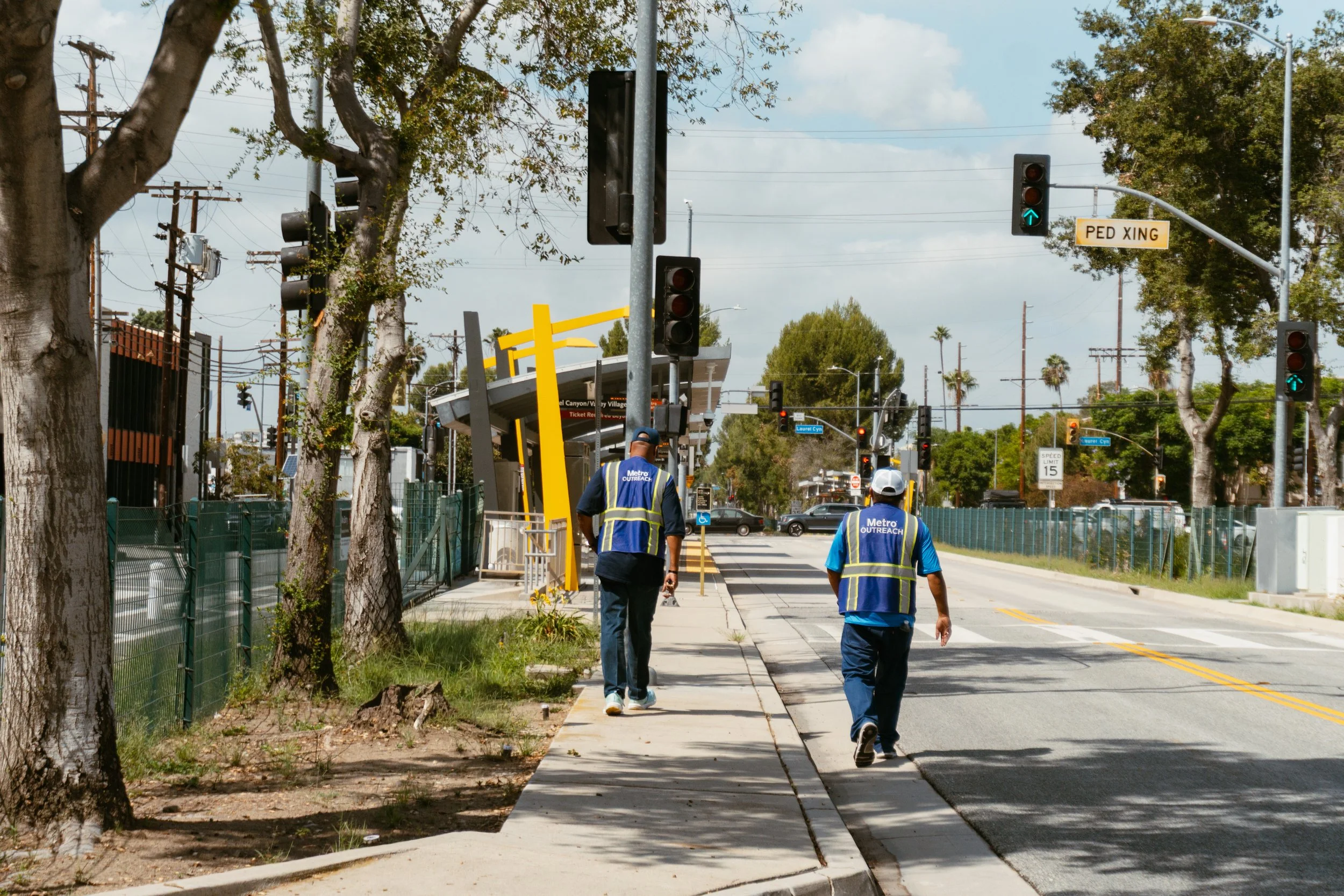
Our trained Outreach Specialists go into the community as part of multidisciplinary teams to make initial contact and maintain ongoing connections with people living on the streets, including those in encampments, LA Metro, and hard-to-reach areas. They work to establish trust over time, helping to connect individuals and families with the housing solutions and essential supportive services that can end homelessness in their lives.
For anyone seeking support to quickly resolve their housing crisis, our Engagement Team is ready to help connect them to homeless and rehousing services. The team provides critical interventions at our Individual Solution Center and Family Solution Center, both located at our main Irmas Family Campus in North Hollywood. We also work across the region, conducting program intakes and providing problem-solving and homeless prevention and diversion services for single adults, couples, and families in L.A. County’s Service Planning Area (SPA) 2, covering the San Fernando and Santa Clarita Valleys, and SPA 1, encompassing the Antelope Valley.
By the Numbers
3,807 participants engaged through our street outreach program. Of these, 82% chose to take advantage of further services to obtain housing.
7,832 participants served through homelessness engagement services, such as prevention and problem solving. Of these, LAFH helped 650 participants retain their housing.
Partner Spotlight: DHS Street Medicine Team
Addressing homelessness requires meeting people where they are and breaking down the barriers that keep them from care. That's why our local partnerships are so vital. By working closely with local organizations, we can go beyond our specialty of care and deliver truly holistic support for those experiencing homelessness.
A critical gap for many unhoused individuals is access to health care. To help bridge this gap, we partner with the Department of Health Services (DHS) and its street medicine team, comprised of doctors, nurses, and behavioral health professionals. Since 2022, our collaboration with the DHS Mobile Clinic has brought essential medical services directly to people in the Sepulveda Basin, North Hollywood Metro Stations, and at special events like Homeless Connect Day. Their retrofitted sprinter van serves as a fully equipped clinic on wheels, offering primary care, medications for acute needs, on-the-spot testing, and support for those without insurance.
“I don’t think I can picture being a doctor anywhere else,” says Dr. Galat, Street Medicine/Mobile Clinic Medical Director and long-time partner of LAFH. For Dr. Galat and his team, practicing street medicine means tackling the injustices that contribute to homelessness in the first place, from lack of housing and food insecurity to barriers in the healthcare system. Solving homelessness requires all of us to work together, drawing on our collective strengths and resources. Or as Dr. Galat puts it: “When it comes to serving the community, there’s so much that needs to be done; we have to learn to rely on one another.”
Celebrating Success: Meet Clifford and Benjamin
Los Angeles is a commuter city, but not everyone drives. According to LA Metro’s “By The Numbers Dashboard,” there were over 25 million rides on its network of buses and trains in July of 2026 alone, connecting 88 cities and over 200 neighborhoods. These services get many Angelenos to and from work, and they also serve as a lifeline for our unhoused neighbors who need to reach critical services.
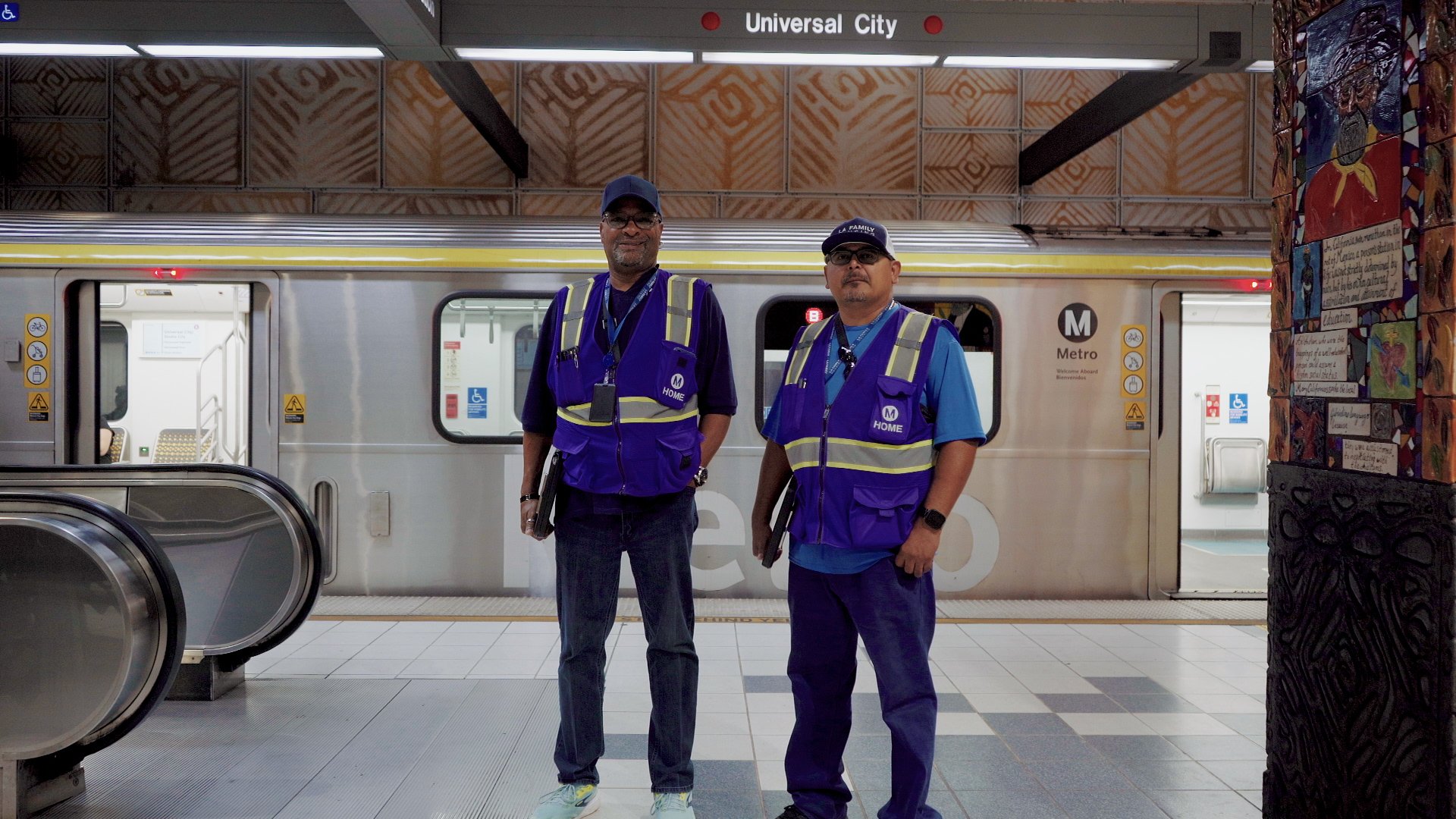
Because our outreach program focuses on meeting people where they’re at, we created a team of Outreach Specialists who are trained to engage with unhoused individuals in transit. Two of those specialists, Clifford and Benjamin, have been with us since the Metro Team first launched at LAFH. Every day, they jump into a car filled with food, water, and other basic supplies and spend much of the day traveling the bus route from North Hollywood to Chatsworth, meeting people experiencing homelessness at every stop along the way.
At each stop, Clifford and Benjamin start the conversation the same way: “Hi, I’m Clifford,” or “Hi, I’m Benjamin. I work for LA Family Housing. How are you doing today?” The question may feel mundane, but many of our unhoused neighbors feel almost invisible to the larger public, so being noticed is crucial to building trust. As participants get more comfortable, the conversation turns to the specialists, who share information about available services and ask whether the person is interested in accessing them.
With funding cut by the county and the city, and housing so scarce, sometimes the hardest part is keeping participants who are actively seeking help engaged and hopeful. Outreach requires a level of optimism, because the road from homelessness to housing is often not linear.
“You have people you’re helping who are engaged for a while, and then they drop off the map sometimes. After 90 days, we technically have to exit them from the program, so if they reappear after those 90 days, we have to start over.” Clifford lamented. We asked them how they keep going when they face these challenges.
Their answer: they draw on optimism from their own stories. Both were once homeless themselves, and both know how long it can take to get back on your feet and what it means to have someone come along and support you.
“I was non-functional as I battled with addiction,” Clifford says. “I couldn’t hold down a job or a place to live, and I eventually became homeless.” Today, Clifford is 16 years sober, and his partner, Benjamin, knows that road too.
“I also struggled with addiction and eventually lost my job and my family,” Benjamin says. His turning point came when his oldest daughter began struggling with substance use. “How can I tell her to stop using when I was [still using]?” he asked himself. That’s when he knew he had to change.
Wanting to change was only the beginning, though. Recovery was a long road, and neither did it alone. Both found support through local faith-based organizations and substance use programs. They showed up to meetings. They leaned on their sponsors. And when they couldn’t see the way forward, they had a community around them that helped them get back on track.
Somewhere along the way, each had the same thought: maybe I can do this for someone else. Clifford began mentoring people in treatment centers. Benjamin became a monitor at a Tiny Home Shelter in the Valley. The help they received became the help they gave, and eventually both found their way to LAFH.
That history is one of the tools they bring to the job. When they meet someone on the street who doesn’t want to accept services, they understand why that person may not be ready. When a participant is frustrated by how long housing is taking, they know that feeling too, because it was once theirs.
But their own stories are only part of what makes Clifford and Benjamin effective. Their lived experience gives them empathy. Their training gives them the tools to turn that empathy into housing. We spent the day shadowing them and they often ended their conversations by sharing their own story, because sometimes what people need most is hope that change is possible and that someone is there to help them do it.
“I was on the other side of the fence, and now I get to share my story with people and give hope… I love to see them get into housing,” Benjamin says. “Their smiles, like, money can’t buy that, you know?”